Email Marketing Strategy for Local Businesses: Stay Top-of-Mind This Fall
Published September 2026 by Author Jacqueline McGreevey
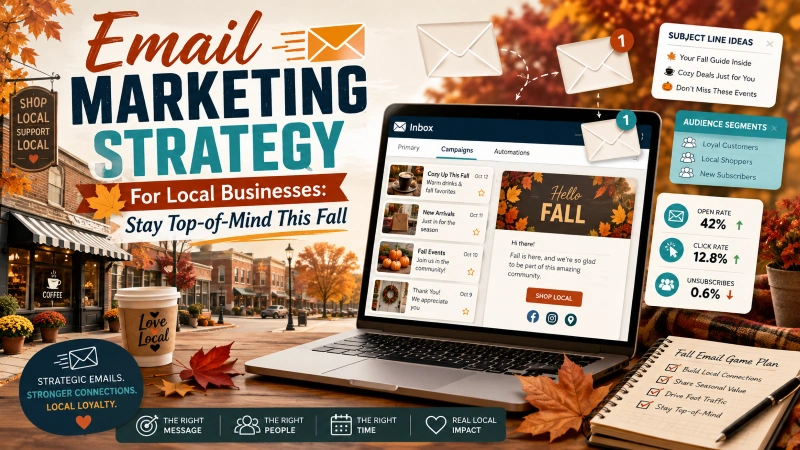
An effective Email Marketing Strategy helps local businesses stay visible after a customer leaves their website or completes a purchase. Fall provides an ideal time to reconnect with customers, share seasonal information, promote services, and prepare for year-end opportunities. Small businesses should focus on useful content, targeted lists, consistent timing, strong calls to action, and measurable results.
Frequently Asked Questions About Email Marketing Strategy

Why is email marketing valuable for local businesses?
Email gives businesses a direct way to communicate with customers who already know or recognize their brand.
How often should a small business send marketing emails?
The right frequency depends on the audience and message. Consistent, useful communication matters more than sending emails as often as possible.
What should local businesses email customers about during fall?
Share seasonal services, helpful tips, upcoming events, promotions, scheduling reminders, business updates, and useful educational content.
Can AI help a small business with email marketing?
Yes. AI can support brainstorming, segmentation, subject lines, personalization, and analysis. Human review should guide every customer-facing message.
Does email marketing still matter as AI changes digital search?
Yes. Email reaches an audience directly and reduces dependence on search engines, social algorithms, and changing AI discovery platforms.
What email marketing metrics should a small business track?
Track delivery, clicks, conversions, unsubscribes, list growth, website activity, and sales or qualified leads when possible.
Should every marketing email include a sales offer?
No. Educational and helpful emails can strengthen trust. Constant promotions can cause subscribers to stop paying attention.
Fall Is an Important Time to Reconnect With Customers
Fall changes routines for families, homeowners, businesses, and communities across Minnesota. Summer travel slows down. School begins, schedules change, and many customers start planning for year-end needs. That makes September an excellent time for local businesses to reconnect with their audiences. Your customers may already know your company. However, they may not remember everything you offer. Email helps place your business back in front of those customers without waiting for another search. This direct connection becomes especially valuable as online discovery becomes more fragmented. Customers now move between Google, social media, AI tools, websites, maps, and other platforms. Email gives your business another way to maintain that relationship.
VantagePoint Marketing provides Email Marketing Strategy services to help businesses create more focused customer communication.
A Strong Email Marketing Strategy Starts With Purpose

Sending emails simply because another month arrived does not create a strategy. Every campaign should have a reason for reaching the customer. Before creating an email, decide what you want the recipient to know or do. Your goal might involve scheduling a service, reading an article, visiting a store, or requesting information. Another campaign might simply strengthen your relationship with existing customers. Each purpose requires different messaging and calls to action.
A focused Marketing Strategy + Planning process can help connect email campaigns with larger business goals.
Do Not Treat Every Subscriber the Same
One of email marketing’s greatest advantages comes from knowing something about the recipient. A former customer has a different relationship with your business than a brand-new prospect. A homeowner interested in roofing should not receive the same message as someone researching windows. Likewise, a long-time customer may respond differently than someone who joined your list yesterday. Segmenting your audience helps create more relevant communication. Useful segments can include previous customers, prospects, service interests, location, purchase history, or engagement level. You do not need dozens of segments to improve results. Even simple segmentation can make messages feel more relevant.
What Should Local Businesses Send This Fall?
Fall creates natural opportunities for useful email content. The strongest ideas connect your business with something customers already need, want, or plan.
| Email Type | Fall Example | Primary Goal |
|---|---|---|
| Educational | Fall maintenance tips or seasonal planning advice | Build expertise and trust |
| Service Reminder | Schedule before winter or before year-end demand increases | Generate appointments or inquiries |
| Customer Follow-Up | Check in after a previous project or purchase | Encourage repeat business |
| Seasonal Promotion | Limited fall offer or bundled service | Generate short-term action |
| Business Update | New service, team member, location, or company milestone | Strengthen customer connection |
| Helpful Content | Share a useful blog, FAQ, guide, or checklist | Bring customers back to your website |
| Review or Success Story | Highlight a recent customer experience or project | Build credibility |
Helpful Emails Can Sell Without Feeling Like Sales Emails
Many small businesses make one common mistake with email. Every message asks the recipient to buy something. That approach can quickly make subscribers tune out. Instead, give customers reasons to continue opening your emails. Teach them something useful. Answer a question they frequently ask. Explain when a service becomes necessary. Share seasonal information that helps them make a better decision. Then connect that helpful information with your service naturally. This approach supports both customer trust and long-term brand recognition.
Email Marketing Creates an Audience You Can Reach Directly
Search engines and social platforms remain important parts of digital marketing. However, businesses do not control how those platforms display their content. Algorithms change. Search results evolve. Social reach can rise or fall. AI-generated search experiences add another layer to customer discovery. An email list creates a different type of marketing asset. Your business can communicate directly with people who have already expressed interest. That does not mean email should replace Search Engine & AI Optimization. Instead, the channels can support each other. SEO can attract new visitors. Email can help keep your business visible after that first visit.
Use AI to Support Email Marketing, Not Replace Your Voice
AI can make email marketing faster, especially for small teams. It can generate topic ideas, organize campaign calendars, and suggest alternate subject lines. AI can also help marketers identify patterns within campaign performance. However, speed does not guarantee quality. Generic AI-generated emails can sound like hundreds of other marketing messages. Local businesses should protect the personality that makes customers remember them. Add real examples, local knowledge, seasonal observations, and information customers cannot find everywhere. Always review AI-generated messaging before sending it. Your brand voice should still sound like your business.
Personalization Should Go Beyond a First Name

Adding someone’s first name can make an email feel more personal. However, useful personalization goes much further. Relevant content creates stronger personalization than a name alone. A previous customer may appreciate maintenance information related to a service they already purchased. A prospect may need answers about timing, cost factors, or what happens next. A seasonal customer may appreciate a reminder before their normal purchasing period arrives. This type of personalization focuses on customer needs rather than marketing tricks.
Your Website and Email Strategy Should Work Together
An email campaign usually sends customers somewhere. That destination often determines whether the campaign succeeds. Do not send customers to a homepage when a specific service page provides a better answer. Link directly to useful content when the email promotes a particular topic. Make sure landing pages work well on mobile devices. Visitors should understand the next step quickly.
A strong Website Design + Hosting foundation helps turn email interest into customer action.
Track More Than Open Rates
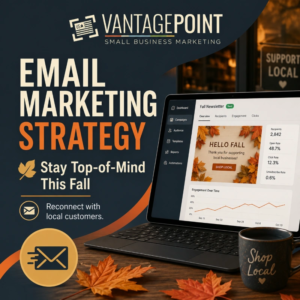
Email marketing becomes more useful when businesses measure what happens after each campaign. Open rates can provide context, but they should not stand alone. Clicks show whether recipients engaged with the message. Website behavior shows what happened after those clicks. Conversions show whether recipients completed meaningful actions. Those conversions may include forms, purchases, phone calls, or appointment requests. Businesses should also monitor unsubscribe activity and list growth.
VantagePoint’s Marketing Analytics + Measurement services help connect marketing activity with measurable business performance.
Useful Email Metrics to Review
- Successful email delivery
- Click-through activity
- Website visits from email
- Conversions and qualified leads
- Unsubscribe activity
- Subscriber growth
- Sales influenced by email
- Performance by audience segment
The goal is not to obsess over every number. Look for trends that help improve your next campaign.
Keep Your Email List Healthy
A larger email list does not automatically create better marketing results. Quality matters more than an impressive subscriber total. A healthy list contains people who genuinely want information from your business. Avoid purchasing email lists simply to increase your reach. Give website visitors clear opportunities to subscribe. Explain what type of information they will receive. Remove invalid addresses and monitor repeated delivery problems. Respect unsubscribe requests and make the process easy. The Federal Trade Commission provides an official CAN-SPAM compliance guide for businesses. The guidance covers commercial email requirements, sender information, subject lines, addresses, and opt-out procedures.
Consistency Builds Familiarity
Email marketing works best when customers hear from your business before they urgently need something. Months of silence followed by aggressive promotions can feel disconnected. A consistent schedule keeps your company more familiar. That schedule does not need to overwhelm your subscribers. For some businesses, monthly communication makes sense. Others may have enough useful information for more frequent campaigns. Choose a schedule your business can maintain without sacrificing content quality.
Plan Fall Email Content Before You Need It
September can quickly turn into October, followed by an even busier holiday season. Creating a simple calendar now prevents last-minute campaigns later. Start by identifying important dates through the end of the year. Add seasonal services, promotions, community events, deadlines, and educational topics. Then decide which audience should receive each message. This process keeps email connected to your larger marketing plan.
Connect Email With Your Other Marketing Channels
Email should not operate in isolation. Your blogs can provide useful email content. Social posts can encourage customers to join your list. SEO can attract visitors who later become subscribers. Paid campaigns can introduce new prospects to your business. Email can then nurture those relationships over time.
VantagePoint helps businesses coordinate these efforts through services such as Social Media Marketing and broader digital strategy.
A Customer Relationship Has More Value Than One Click

Digital marketing often focuses heavily on attracting new traffic. However, businesses should not overlook people who already know them. Previous customers may need another service. Prospects who were not ready last spring may be ready this fall. Past website visitors may simply need another reminder. Email helps businesses continue those conversations. That long-term value makes email especially useful for local companies built around trust and repeat relationships.
“The team at VPM are AMAZING!!! They took the time to listen to what I needed for my website. The creativity and talent that they display shines throughout my website. Any time I had a question they were prompt to respond. Overall, they are professional, creative and helpful!”
— Janine, 5-Star Google Review
Stay Top-of-Mind This Fall
A successful Email Marketing Strategy does not depend on filling inboxes with more promotions. It depends on sending useful messages to the right people at the right time. For local businesses, fall offers an opportunity to reconnect before year-end activity increases. Review your audience, organize your content, and decide which customer actions matter most. Then measure what works and improve each campaign over time. VantagePoint Marketing helps small businesses connect email with websites, SEO, content, analytics, and overall marketing strategy. Ready to build an email strategy that keeps your business visible and your customers engaged?
Contact VantagePoint Marketing to create a stronger digital marketing plan for fall and beyond.