
How Do You Know If Your Business Is Actually Visible Online?
Effective online visibility measurement looks beyond one Google ranking. Businesses should monitor search impressions, website traffic, Google Business Profile activity, AI search visibility, branded searches, landing pages, leads, calls, and conversions. The goal is to determine whether the right people can find your business and take meaningful action. Being online does not automatically mean customers can find you. A website may exist for years without generating meaningful visibility. A Google Business Profile may receive views but very few calls or website visits. Modern search also makes visibility harder to judge by eye. Customers can encounter businesses through organic results, Maps, AI Overviews, AI Mode, images, videos, and other search experiences. Businesses need several measurements to understand what is actually happening. This article completes our October series on how small businesses get found in Google and AI search. The previous articles focused on helping search systems understand your business and creating content worth citing or recommending.
Frequently Asked Questions About Online Visibility Measurement

What does online visibility mean?
Online visibility describes how often potential customers can discover your business across search engines, maps, AI results, websites, and other digital channels.
Is Google ranking enough to measure online visibility?
No. Rankings vary by query, location, device, personalization, and search format. Impressions, clicks, profile interactions, traffic, leads, and conversions provide a fuller picture.
Can businesses measure visibility in Google AI search?
Yes. Google Search Console now includes dedicated Generative AI performance reports for eligible sites. These reports show when website pages appear in Google’s generative AI search features.
What Google Business Profile metrics should businesses track?
Useful metrics include profile views, searches, calls, website clicks, direction requests, messages, and bookings when available. Businesses should evaluate trends rather than isolated numbers.
Why can website traffic increase without leads increasing?
Traffic may come from low-intent searches, irrelevant audiences, or weak landing pages. Businesses should evaluate visitor quality and conversions alongside traffic volume.
How often should online visibility be reviewed?
Monthly reviews work well for many small businesses. Longer comparisons can reveal trends that short-term ranking changes may hide.
Online Visibility Is More Than Showing Up in Google
Years ago, businesses often measured SEO by checking where one keyword ranked. That approach has become increasingly incomplete. Search results now change based on location, device, intent, personalization, and result type. A customer might discover your company in Maps without visiting your website. Another may see your business inside an AI-generated answer. Someone else may find an image, video, blog article, or service page. True visibility asks a broader question: How often is your business appearing when the right customers are looking?
What Should Online Visibility Measurement Include?
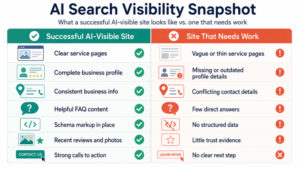
No single metric tells the whole story. Businesses need several data points that reveal discovery, engagement, and conversion. The strongest reporting connects those stages together.
| Measurement Area | What It Shows | Examples |
|---|---|---|
| Search Visibility | How often your website appears in search | Impressions, queries, pages, average position |
| AI Search Visibility | Whether pages appear in generative Google features | AI feature impressions, pages, devices, countries |
| Local Visibility | How customers find and interact with your Business Profile | Views, searches, calls, directions, website clicks |
| Website Engagement | What visitors do after reaching your site | Landing pages, engagement, forms, calls |
| Conversions | Whether visibility creates business opportunities | Leads, appointments, purchases, quote requests |
1. Start With Google Search Console Impressions
Search Console impressions provide one of the clearest measures of search exposure. An impression occurs when a page from your website appears in eligible Google Search results. Growing impressions can show that Google is surfacing your content for more searches. Do not review the total alone. Look at which pages and queries produce those impressions. That detail reveals what Google currently associates with your business. A service page gaining impressions for relevant searches can indicate growing topic visibility. A blog attracting unrelated searches may need different evaluation.
2. Review the Queries That Trigger Your Website
Search queries reveal how people are discovering your website. They also reveal how Google interprets your content. Both insights are valuable. Look beyond your company name. Branded searches matter, but non-branded searches often reveal whether new customers can discover you before knowing your business. For example, “VantagePoint Marketing” represents branded visibility. A search such as “marketing agency in Anoka MN” represents broader discovery. Both have value, but they measure different stages of awareness.
3. Separate Branded and Non-Branded Visibility
A business may appear highly visible because many existing customers search for its name. That is positive, but it does not necessarily show strong discovery among new prospects. Separating branded and non-branded performance provides better context. Branded searches can reflect awareness, referrals, reputation, and repeat interest. Non-branded searches show whether your business reaches people searching for a service, product, problem, or solution. Over time, healthy visibility often includes growth in both categories.
4. Measure Visibility by Page, Not Just by Website
Website-wide totals can hide important differences. One page may gain significant visibility while another loses it. Search Console lets businesses review individual landing pages and compare their performance. This matters especially for service pages. If roofing generates impressions but siding does not, the website may have a service-level visibility gap. The correct response may involve content, internal links, technical SEO, or stronger supporting resources. This page-level approach connects directly with our article about website search signals. Clearer service signals can make individual pages easier for search systems to understand.
5. Google Now Provides Dedicated AI Search Visibility Data

AI search visibility used to be difficult to measure directly inside Google. That changed in 2026. Search Console now includes dedicated Generative AI performance reporting. Google says these reports show when website URLs appear within generative AI features in Search and Discover. Website owners can review impressions, pages, countries, devices, and dates. This creates a much stronger measurement baseline for AI visibility. Google completed worldwide rollout of these reports by August 31, 2026. That makes AI visibility less dependent on manual searches and third-party estimates. You can review Google’s Generative AI Search Console reporting announcement for more detail.
Do Not Confuse AI Impressions With AI Recommendations
Seeing a URL within an AI feature does not necessarily mean an AI system explicitly endorsed your business. It means your website appeared within that search experience. Businesses should avoid turning visibility data into stronger claims than the data supports. This distinction matters when reporting results. Accurate reporting builds trust and makes long-term trends easier to evaluate.
6. Search Visibility Now Includes Visual Search Too
People increasingly search with images as well as words. Google Lens, Circle to Search, image uploads, and related tools allow users to search visually. That creates another possible discovery path. In September 2026, Google added multimodal search reporting to Search Console. Websites receiving this type of traffic can use a new filter to analyze image-based search performance. This development makes quality images more than a design consideration. Original project images, products, locations, diagrams, and visual examples may also contribute to discovery.
7. Measure What Happens in Google Business Profile
Local businesses need to evaluate more than website search results. Customers may interact directly with a Google Business Profile without ever reaching the website. Those interactions still represent valuable visibility. Google Business Profile performance can include views, searches, calls, website clicks, directions, messages, and bookings when applicable. Google notes that available metrics vary by business. That means a local business can generate meaningful customer activity even when website traffic stays relatively flat.
Google Business Profile Metrics to Watch
| GBP Metric | What It Can Tell You |
|---|---|
| Searches | Which search terms caused your profile to appear |
| Views | How many unique people viewed your profile on Search and Maps |
| Calls | How often customers clicked the call button |
| Website Clicks | How often profile visitors continued to your website |
| Directions | How often people requested directions |
| Messages or Bookings | Direct customer actions when those features apply |
Google now also allows eligible businesses to connect Business Profile data with Google Analytics. This can make it easier to view local interactions alongside website activity.
8. Traffic Is Useful, but Traffic Quality Matters More
More website visitors sound positive. However, traffic volume alone does not tell you whether the right people arrived. A business can gain traffic while generating fewer qualified leads. Look at which pages visitors enter, what searches brought them there, and what actions follow. A service page generating five qualified inquiries may provide more value than a blog generating thousands of unrelated visits. Google also recommends looking beyond traffic volume when evaluating AI search. Search Console data can be combined with analytics and conversion information to understand visitor quality.
9. Measure Leads and Conversions Alongside Visibility
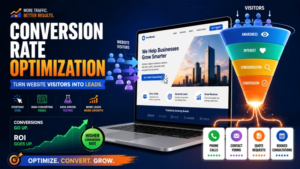
Visibility has business value when it leads to meaningful actions. Those actions vary by company. They may include calls, forms, purchases, appointment requests, downloads, or store visits. That does not mean every search visitor converts immediately. Some customers research several times before contacting a business. Still, conversion tracking helps connect marketing exposure with business outcomes. This is why VantagePoint’s marketing analytics and measurement approach looks beyond basic traffic totals.
10. Track Calls Properly
Phone calls remain important for many service businesses. If calls are a major source of leads, reporting should account for them. Website calls and Google Business Profile calls may come from different pathways. Businesses should also distinguish between phone clicks and actual qualified leads when possible. A button click indicates intent, but not every click becomes a customer.
11. Look at Visibility Across Important Services
Total website visibility can increase while one major service remains almost invisible. Review search performance by service category. This identifies opportunities that overall reports may hide. A remodeling company might perform well for roofing but poorly for windows. A landscaping company may rank for patios but not commercial snow removal. A marketing agency may receive strong SEO exposure but little visibility for video production. Service-level analysis makes content planning more strategic. Instead of publishing randomly, businesses can strengthen areas with meaningful gaps.
12. Measure Visibility Across Important Locations
Local businesses should also evaluate geography. A company may be highly visible near its office but nearly absent in another priority service area. City and regional performance can reveal those differences. Search Console country data is too broad for most local SEO analysis. Local landing pages, Google Business Profile data, lead locations, and carefully interpreted ranking tools may provide additional context. Do not assume one ranking represents an entire service area. Local results can change significantly across short distances.
13. Watch Trends Instead of Individual Days

Search performance naturally fluctuates. Seasonality, demand, algorithm changes, competitors, news, and customer behavior can all affect results. One good or bad day rarely tells you much. Compare meaningful time periods instead. Twenty-eight-day comparisons work well for shorter reviews. Longer quarterly or year-over-year comparisons can reveal seasonal trends. The goal is to identify a pattern rather than react to every movement.
14. Compare Visibility With Business Priorities
Not every impression has equal value. A company should care most about visibility connected to its actual services, markets, and goals. Reporting should reflect those priorities. For example, 10,000 impressions for an informational topic may look impressive. Five hundred impressions for a profitable commercial service may create more business opportunity. Good reporting asks whether visibility is growing in areas the company actually wants to grow.
15. Use Third-Party AI Tracking Carefully
Third-party tools can help businesses monitor mentions across AI platforms. They can identify trends, compare prompts, and organize observations. However, they should not be treated as direct access to an AI platform’s internal ranking systems. Google specifically warns businesses to be cautious with tools claiming access to internal Google ranking or AI metrics. No outside tool has direct access to those systems. Use outside tools as one data source, not as absolute proof of visibility.
A Practical Online Visibility Scorecard
You do not need dozens of reports to understand whether visibility is improving. A focused monthly scorecard can answer the most important questions. Keep it tied to business goals.
| Question | Metric to Review |
|---|---|
| Are more people seeing us in Google? | Search Console impressions |
| What are we being found for? | Search queries |
| Which services are gaining visibility? | Page-level impressions and clicks |
| Are we appearing in Google’s AI features? | Generative AI performance report |
| Are local customers finding us? | GBP searches, views, calls, directions, and clicks |
| Are visitors reaching important pages? | Landing page traffic |
| Do visitors take action? | Calls, forms, purchases, bookings, or other conversions |
What If Impressions Rise but Clicks Fall?
This situation is not automatically bad. Your website may be appearing for more searches, including searches that users can partially answer from results. AI-generated search experiences can also change clicking behavior. Review the pages and queries behind the change. Then look at conversions, engagement, and lead quality. A smaller number of more qualified visitors can still create stronger business results. Google has stated that clicks from pages containing AI Overviews can show stronger engagement in some situations. This reinforces the need to evaluate visitor quality alongside raw click totals.
What If Rankings Look Good but Leads Stay Flat?
Good rankings do not automatically create business. The ranking may be for the wrong searches, or the landing page may not match customer intent. Visitors may also encounter weak calls to action or unclear service information. Review the entire path from search query to landing page to conversion. Visibility problems and conversion problems require different solutions.
What If Leads Increase but Website Traffic Does Not?

This can happen when customers interact directly with Google Business Profile. They may call, request directions, or message the business without visiting the website. Strong referral or branded activity can also contribute. That is why website analytics alone can miss part of the customer journey. Google Business Profile data and lead tracking fill important gaps.
Measure Visibility Across the Entire Customer Journey
A useful visibility report follows the customer from discovery through action. Search Console may show where discovery begins. Google Business Profile can reveal local interactions. Analytics and conversion tracking can show what happens next. No single dashboard provides every answer. Combining these sources creates a more realistic view of performance.
Online Visibility Should Lead to Better Decisions
Online visibility measurement is not simply about producing reports. The data should guide action. Strong reporting helps identify what to improve next. If impressions rise but clicks stay weak, review search intent and page presentation. When one service lacks visibility, strengthen its content and internal links. If traffic grows without leads, evaluate conversion paths. Measurement becomes valuable when it changes what you do.
Build Visibility, Then Prove It
Search marketing has become more complex, but businesses also have better measurement tools. Traditional search, local search, AI features, visual search, and website behavior can now provide different pieces of the same story. The goal is not to appear everywhere for everything. The goal is to become visible when relevant customers need what your business provides. That requires strong SEO, clear AI website optimization, useful content, accurate local information, and reliable measurement.
VantagePoint Marketing helps small businesses understand both sides of visibility: how to improve it and how to measure whether it is working. Contact VantagePoint Marketing to discuss your website, search visibility, Google Business Profile, or online presence.
Published October 2026
Authored by Jacqueline McGreevey









Trackbacks & Pingbacks
[…] Visibility should never be judged using one ranking alone. Search behavior differs by location, device, query, personalization, and search format. AI-driven results create even more variation. Google Search Console now includes reporting for generative AI search features. Businesses can also review impressions, queries, landing pages, clicks, conversions, calls, and Google Business Profile activity. These measurements show whether visibility produces meaningful business opportunities. VantagePoint’s marketing analytics and measurement process looks beyond surface-level numbers. The goal is to connect visibility with actions that support business growth. Click this link for more in depth information on measuring your business online visibility […]
Comments are closed.