How Can Small Businesses Get Found in Google and AI Search?
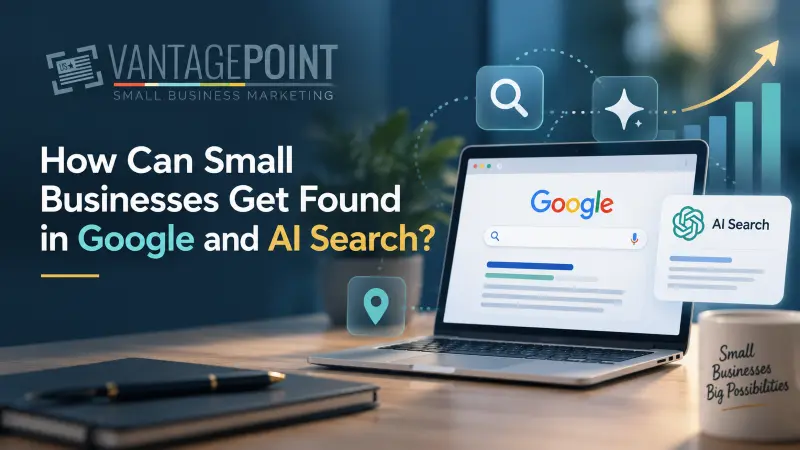
Small businesses can improve visibility in Google and AI search by creating a clear, trustworthy digital presence. Strong SEO, useful content, accurate business information, structured website signals, and local authority all work together. Businesses also need websites that search engines can crawl, understand, and confidently connect with customer questions. Getting found online no longer means ranking for one keyword in a traditional search result. Customers now discover businesses through Google Search, Maps, AI Overviews, AI Mode, voice search, and other AI-powered tools. The search journey has expanded, but the fundamentals behind strong visibility remain surprisingly consistent.
Frequently Asked Questions About Google and AI Search

Does traditional SEO still matter for AI search?
Yes. Google states that its generative AI search features still rely on its core search systems and index. Technical SEO, useful content, internal linking, crawlability, and authority remain important foundations.
Do small businesses need separate content for Google and AI search?
Usually, no. Businesses should create useful content for customers instead of rewriting every page specifically for AI systems. Clear answers, first-hand expertise, strong organization, and useful details can support visibility across multiple search experiences.
Can schema markup help a business appear in AI search?
Schema can help search engines better understand business information and page meaning. However, Google does not require special AI schema for its generative search features. Structured data should support visible content rather than replace strong content.
Does a Google Business Profile affect AI and search visibility?
A complete Google Business Profile strengthens local business information across Google Search and Maps. Google also notes that Business Profile information can support visibility in generative AI search experiences.
Can a small business guarantee that AI tools will recommend it?
No legitimate strategy can guarantee an AI recommendation or top search position. Businesses can improve their chances by strengthening relevance, credibility, technical accessibility, and useful content across their online presence.
Being Found Online Now Means More Than Ranking
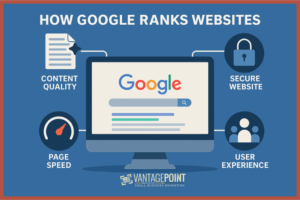
Traditional Google rankings still matter, but they represent only part of today’s search landscape. A customer might see your business in Maps, an AI-generated answer, an image result, or a standard organic listing. Another customer may search conversationally instead of entering a short keyword. This change makes overall digital clarity more important. Search systems need to understand who you are, what you provide, where you work, and why your information deserves attention. Customers need those same answers before they contact you. That is why modern SEO, AEO, and GEO strategies should work together. They should not operate as disconnected marketing tactics.
How Google and AI Search Find Information
Search engines first need access to your content. Important pages should be crawlable, indexable, internally linked, and easy to navigate. A page hidden deep inside a website has fewer opportunities for discovery. Google explains that its generative AI experiences still use information from its Search index. Its systems may also explore related questions when developing an AI response. This makes complete topic coverage more valuable than repeating one keyword throughout a page. See our article for more in-depth information on helping AI understand your business
Google’s current generative AI search guidance recommends strong SEO foundations and valuable content. It does not recommend creating gimmicks solely for AI systems.
Five Signals Help Build Visibility Across Modern Search
A small business does not need to chase every new search feature separately. Focus instead on creating strong signals across five connected areas. Each area helps search systems and customers understand the business more clearly.
| Visibility Signal | What It Communicates | Practical Small Business Action |
|---|---|---|
| Website Structure | What the business offers and how topics relate | Create clear service pages, navigation, headings, and internal links |
| Helpful Content | Knowledge, experience, relevance, and expertise | Answer real customer questions with specific, original information |
| Business Information | Who the business is, where it operates, and how customers connect | Keep website, Google Business Profile, contact information, and services aligned |
| Structured Data | Machine-readable context about the business and page | Use appropriate Organization, LocalBusiness, service, article, and other supported schema |
| Authority Signals | Why the business or content deserves trust | Build reviews, citations, links, expert content, authorship, and real-world recognition |
1. Make It Easy to Understand What Your Business Actually Does
A website should not make customers search for basic answers. Your primary services should appear clearly within navigation, service pages, headings, and page copy. Location information should also make sense for businesses serving defined communities. This clarity helps search systems connect your company with relevant topics. It also reduces ambiguity between similar businesses or services. A vague homepage cannot carry the entire SEO strategy. For example, a remodeling company may provide roofing, siding, windows, decks, and commercial work. Each major service deserves enough information for customers and search systems to understand it. Combining every service into one short paragraph creates very little context. Click here, for more information on making your website content worth citing
2. Create Content That Adds Something New

Publishing more articles does not automatically build authority. The internet already contains thousands of basic posts covering common questions. Repeating the same surface-level answers adds little value. Google’s newer AI search guidance specifically encourages unique and useful content. It describes this as content that goes beyond information anyone could easily reproduce. First-hand experience can help provide that difference. A roofing company could explain what its inspectors commonly find on Minnesota commercial roofs. A tree company could show how local soil, snow, and species affect tree care. A marketing agency could share patterns discovered through actual Search Console or Google Business Profile work. Specific experience transforms generic information into useful expertise. It also gives customers a reason to choose your resource over ten similar articles.
3. Build Topic Depth Instead of Publishing Isolated Articles
One detailed article can perform well, but connected content can explain a subject more completely. A broad resource can introduce the subject while supporting articles explore specific questions. Internal links then connect those related ideas. This approach is the basis of a pillar and cluster content strategy. The goal is not to manufacture dozens of pages. The goal is to cover meaningful customer questions with enough depth to be genuinely useful. This article serves that role for Google and AI search visibility. Supporting articles can explain search signals, authoritative content, and visibility measurement in greater detail.
4. Use Structured Data to Reinforce Meaning
Schema markup gives search engines structured information about website content. Organization and LocalBusiness markup can clarify important business details. Other supported markup can identify articles, products, events, videos, and additional content types. Schema should match what visitors can actually see on the page. It should never make claims that visible content does not support. Google also states that no special AI schema is required for its generative search features. VantagePoint uses schema as one part of a broader AI website optimization strategy. Strong structured data works best alongside strong content and technical SEO.
5. Keep Your Google Business Profile Aligned With Your Website
Local businesses have another important source of visibility: Google Business Profile. Categories, services, hours, reviews, photos, and contact information all help describe a business. The website should reinforce those details instead of contradicting them. Google says local results rely mainly on relevance, distance, and prominence. Complete business information can improve Google’s ability to match a profile with relevant searches. Reviews and links can also contribute to prominence. Our article on Google Business Profile SEO explains how the profile and website should support each other.
6. Make Important Information Easy to Find
Search systems cannot use information effectively when they cannot access it. Visitors also lose patience when important details hide behind confusing navigation. Good architecture serves both groups. Important services should have logical URLs and direct internal links. Pages should use descriptive headings and useful anchor text. Key information should also appear as readable text instead of existing only inside images. A well-planned website design supports search visibility before content promotion even begins. Design, usability, SEO, and conversion strategy should support the same business goals.
7. Show Real Experience and Expertise
AI makes basic information easier than ever to produce. That makes first-hand experience increasingly valuable. Businesses possess knowledge that generic content generators do not automatically have. Examples include project challenges, customer questions, regional differences, product comparisons, photographs, data, and lessons learned. Owners and subject experts can also review technical content before publication. Clear author information provides additional context about who created the material. Businesses should ask one important question before publishing: What does this page contribute that a customer cannot get from a generic summary? That question can significantly improve content quality.
8. Strengthen Your Business Entity Across the Web
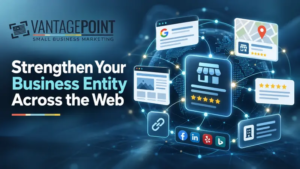
Your website does not exist by itself. Search systems can encounter your company through reviews, directories, articles, social profiles, business listings, and other websites. Consistency across these sources helps reduce confusion. Use the same core business name and accurate contact information wherever appropriate. Keep descriptions and services consistent without making every listing identical. Earn legitimate mentions through real business activity, relationships, community involvement, and useful expertise. A strong online presence comes from real-world credibility represented accurately online. Artificial mentions or mass-produced listings cannot replace genuine authority.
9. Optimize for People Before Optimizing for Machines
Modern search technology has become better at understanding natural language. Businesses do not need to repeat awkward keyword phrases throughout every page. They need to answer the questions behind those searches. Write clear headings and give direct answers where appropriate. Then provide enough context to help readers make decisions. Use tables, photographs, examples, videos, and FAQs when they genuinely improve understanding. This approach supports SEO while producing a better customer experience. It also follows Google’s emphasis on helpful, reliable, people-first content.
10. Measure Whether Your Visibility Is Actually Improving

Visibility should never be judged using one ranking alone. Search behavior differs by location, device, query, personalization, and search format. AI-driven results create even more variation. Google Search Console now includes reporting for generative AI search features. Businesses can also review impressions, queries, landing pages, clicks, conversions, calls, and Google Business Profile activity. These measurements show whether visibility produces meaningful business opportunities. VantagePoint’s marketing analytics and measurement process looks beyond surface-level numbers. The goal is to connect visibility with actions that support business growth. Click this link for more in depth information on measuring your business online visibility
Google and AI Search Visibility Is a System
Small businesses sometimes look for one change that will unlock AI visibility. In practice, visibility comes from many connected signals. Website architecture, useful content, business information, local presence, technical SEO, and authority all contribute. Think of these signals as evidence. One optimized title tag provides limited evidence about a business. A complete website, strong service content, reviews, schema, local information, and expert resources provide much stronger context. The businesses positioned best for modern search are not necessarily those producing the most content. They are often the businesses communicating their expertise most clearly and consistently.
What Small Businesses Should Prioritize First
You do not need to rebuild your entire digital presence at once. Start by fixing the signals that create the most confusion. Then develop stronger content around the questions customers actually ask.
- Confirm that Google can crawl and index important pages.
- Create a dedicated page for each important service.
- Keep Google Business Profile information complete and accurate.
- Improve weak or generic website content.
- Add appropriate structured data and verify its accuracy.
- Create original content based on customer questions and real experience.
- Strengthen internal links between related services and resources.
- Build legitimate reviews, links, citations, and community authority.
- Measure search visibility and lead activity over time.
Avoid Shortcuts That Sound Like “AI SEO Hacks”
New technology always creates new marketing claims. Some tools promise guaranteed AI citations, special files, secret schema, or instant authority. Businesses should approach those claims carefully. Google specifically says websites do not need special AI text files or special schema to appear in its generative search experiences. It also advises against creating excessive pages for every possible search variation. Strong optimization is usually less dramatic. Make your business clear, useful, technically accessible, and trustworthy. Then monitor results and improve what customers actually use.
Build a Search Presence That Can Evolve
Google and AI search will continue changing. Small businesses cannot control every new interface, algorithm, or answer format. They can control the quality and clarity of their own digital presence. VantagePoint Marketing helps businesses connect SEO and AI optimization, content, website structure, Google Business Profile management, and measurement. Our goal is to create a stronger foundation across the places customers search.
If you are unsure how well search engines and AI systems understand your company, start with an online presence review. Learn more about VantagePoint’s Free Website Review and Online Presence Check, or contact VantagePoint Marketing to discuss your website and search visibility.

Published October 2026
Authored by Jacqueline McGreevey