
What Helps Google and AI Understand What Your Business Does?
The strongest website search signals help Google and AI understand your business clearly and accurately. These signals include service pages, internal links, schema markup, headings, business details, local information, and helpful content. When those elements work together, search systems can better connect your business with the right customer searches. Many businesses want better visibility in Google and AI search. However, visibility starts with clarity. Search systems need clear signals that explain who you are, what you offer, where you work, and why your business is relevant.
This article expands on our pillar post, How Can Small Businesses Get Found in Google and AI Search?. Here, we will focus on the specific signals that help search engines and AI tools understand your business more accurately.
Frequently Asked Questions About Website Search Signals

What are website search signals?
Website search signals are the clues your website gives search engines and AI systems. They help explain your services, location, expertise, and page relationships.
Do Google and AI tools need schema to understand a business?
Schema is helpful, but it is not enough by itself. Search systems also rely on visible page content, site structure, internal links, and clear business details.
Can one homepage explain everything about a business?
No. A homepage can introduce a company, but deeper service pages provide the detail needed for stronger understanding and better relevance.
Do internal links really matter for SEO and AI search?
Yes. Internal links help search systems discover pages and understand topic relationships. They also guide visitors to the next helpful page.
What is the biggest mistake businesses make with search signals?
Many businesses stay too vague. They do not clearly explain services, service areas, differences, and supporting details across their website.
What Are Website Search Signals?

Website search signals are the pieces of information that help search engines understand a page and the business behind it. Some signals are visible to people, like headings and service descriptions. Others work behind the scenes, like schema markup and crawlable site structure. Search systems do not guess your business correctly just because your website exists. They look for patterns, context, and supporting details. When your site sends mixed messages, search visibility can weaken.
Why Google and AI Need Clear Business Signals
Google and AI search tools try to match user questions with the most relevant and helpful information. To do that well, they need confidence about your business. That confidence comes from consistent, repeated signals across your website. For example, a business may say it offers SEO on the homepage. But if it has no dedicated SEO service page, no supporting articles, and no related internal links, the topic looks thin. Search systems may then struggle to understand the true depth of that service.
Google’s AI optimization guidance makes this clear. Strong SEO foundations still matter because Google’s AI search features rely on core Search systems.
The Most Important Website Search Signals for Small Businesses
Not every signal carries the same weight in every situation. Still, several core elements help most small business websites. These signals work best when they support each other.
| Website Search Signal | What It Tells Google and AI | How to Strengthen It |
|---|---|---|
| Service Pages | What your business actually offers | Create one strong page for each key service |
| Headings and On-Page Copy | What each page is mainly about | Use clear H1s, H2s, and direct service language |
| Internal Links | How topics and pages connect | Link related pages using natural anchor text |
| Schema Markup | Structured meaning of the page and business | Add accurate schema that matches visible content |
| Business Information | Who you are and where you operate | Keep name, contact details, and service areas consistent |
| Helpful Content | Your expertise and topic depth | Answer real customer questions with specific detail |
1. Service Pages Create Core Meaning
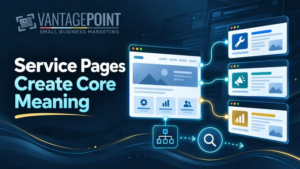
Dedicated service pages are one of the clearest website search signals. They tell search systems what your business does in a direct way. They also give you room to explain details that a homepage cannot cover. If your company offers SEO, website design, paid advertising, and analytics, each service should have its own page. Those pages should explain what the service includes, who it helps, and what results or benefits matter. Clear service architecture creates stronger topical understanding.
At VantagePoint, that means supporting pages for services like Search Engine Optimization, AI Website Optimization, and Website Design & Hosting.
2. Clear Headings Help Search Systems Read the Page
Good headings help both visitors and search engines. They break content into understandable sections and reinforce page meaning. A strong heading structure makes a page easier to scan and easier to interpret. Your H1 should clearly state the topic. H2 and H3 headings should then organize the details underneath it. Generic headings like “Learn More” or “Our Process” may work in some contexts, but they should not replace specific service language. For example, “SEO for Local Businesses” sends a clearer signal than “Our Approach.” The best heading structure makes the page topic obvious within seconds.
3. Internal Links Show How Topics Connect
Internal links do more than move visitors from one page to another. They help search systems understand the relationship between pages. A strong internal linking strategy can support both discovery and context. If a page about AI optimization links to SEO, analytics, and content strategy, that network tells Google those topics are related. If blog posts and service pages stay isolated, the site loses that helpful context. Internal links also make your topic clusters more valuable. This is one reason we use pillar and cluster structures. This article supports the broader pillar, and it should eventually link to the related cluster on what makes website content worth citing or recommending.
4. Schema Markup Adds Structured Clues
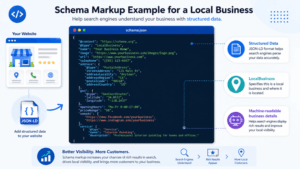
Schema markup helps Google understand page meaning in a more structured format. It can clarify information about an organization, local business, service, article, FAQ, and more. That extra context can support search understanding. However, schema should reinforce visible content, not replace it. A page cannot stay vague and rely on schema to do all the work. Google has also made it clear that there is no special AI-only schema requirement. Google explains structured data here: Introduction to structured data markup in Google Search. We treat schema as one important layer within a broader SEO and AI optimization strategy.
5. Your Navigation Helps Define Your Business
Site navigation is often overlooked. Yet it sends strong signals about your priorities. The pages you place in your main navigation usually signal your most important topics. If your navigation hides core services, search systems may need more effort to find them. If it highlights the wrong pages, your site may appear less focused. Clear navigation supports stronger crawling and stronger business understanding. Important pages should also be reachable in only a few clicks. Deeply buried service pages often receive less attention from both users and crawlers.
6. Business Details Must Stay Consistent
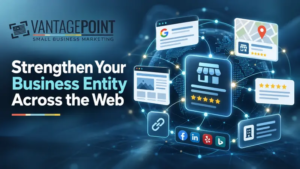
Your business name, contact details, service area, and service descriptions should stay aligned across the website. These details help search systems connect your pages to a real business entity. They also reduce confusion for users. A business that lists one name on the homepage, another in the footer, and different service wording on the contact page sends weak signals. The same problem happens when service areas stay unclear. Consistency supports understanding and trust.This also matters for your Google Business Profile SEO. Your website and profile should reinforce each other, not compete with each other.
7. Helpful Content Adds Depth and Relevance
Google and AI search systems look beyond a list of services. They also look for helpful content that shows subject depth. Blog po sts, FAQs, comparison pages, and educational content all support stronger understanding. This is especially helpful when customers ask nuanced questions. A business that answers those questions well builds stronger topical signals. It also creates more paths for discovery. Google’s people-first content guidance encourages original, helpful content that adds value. In other words, businesses should not just restate what every other website says. They should contribute useful detail based on real experience.
8. Local Details Matter More Than Many Businesses Realize
Many small businesses serve specific cities or regions. That local information helps search systems understand where your services apply. It also helps match the business with geographic intent. Relevant local signals may include your address, service area, city pages, local references, and location-specific service details. These signals should feel natural and helpful. They should not read like forced keyword lists. For service businesses, location clarity can be especially important. A business that serves the Twin Cities should make that easy to see. A business that serves only one city should make that clear as well.
9. Visual Content Can Support Understanding Too

Images, captions, alt text, and supporting visuals can add context to a page. They can help explain services, reinforce brand consistency, and improve usability. They should support the page topic in a meaningful way. However, important information should not exist only inside images. Search systems still rely heavily on crawlable, readable text. If your main service explanation appears only on a graphic, that signal becomes weaker. That is one reason VantagePoint focuses on both website design and SEO structure. A well-designed page should still communicate clearly in text.
10. Weak Signals Usually Come From Vagueness
The biggest search signal problem is often not technical. It is vague messaging. Many websites say they offer “solutions,” “quality service,” or “custom support” without clearly naming what they do. That kind of copy weakens both SEO and AI understanding. Search systems need specific language. Customers do too. A strong page names the service, explains who it helps, describes how it works, and connects to related information. That is far more useful than broad marketing language alone.
How to Improve Website Search Signals
If your site does not clearly explain your business, start with the basics. Improve clarity before chasing advanced tactics. Strong foundations usually create the biggest gains.
- Review your main services. Make sure each important service has its own page.
- Rewrite vague headings. Use clear, direct wording that names the service or topic.
- Strengthen internal links. Connect related pages and blog posts naturally.
- Check business consistency. Align your name, contact details, and service area across the site.
- Add accurate schema. Support the page with Organization, LocalBusiness, Service, Article, or FAQ markup where appropriate.
- Expand useful content. Answer the questions customers actually ask.
- Review page accessibility. Make sure search engines can crawl important content.
Good Search Signals Create Better Visibility
Google and AI search tools cannot recommend or surface a business clearly if the website stays unclear. Strong website search signals make your business easier to understand. They also make your site more useful for visitors. Service pages, headings, internal links, schema, local details, and helpful content all play a role. None of these signals works best alone. They work best when they support a clear and consistent digital presence. If your website is not sending the right signals, VantagePoint Marketing can help. We build stronger websites through SEO, AI website optimization, website design, and measurement.
Want help improving how Google and AI understand your business? Contact VantagePoint Marketing or request a review of your website and online presence.

Published October 2026
Authored by Jacqueline McGreevey









Trackbacks & Pingbacks
[…] Search engines first need access to your content. Important pages should be crawlable, indexable, internally linked, and easy to navigate. A page hidden deep inside a website has fewer opportunities for discovery. Google explains that its generative AI experiences still use information from its Search index. Its systems may also explore related questions when developing an AI response. This makes complete topic coverage more valuable than repeating one keyword throughout a page. See our article for more in-depth information on helping AI understand your business […]
Comments are closed.